- Home ›
- One Stop Europe ›
- Postal Prosperity Zone (PPZ): Part 2
The Postal Prosperity Zone (PPZ)
Part 2: a blueprint for the
next generation of cross-border ecommerce infrastructure
March 2026
Author: Walter Trezek Linkedin
Share this article:
At A Glance
- (Part 1: How designated operators lost control of cross-border ecommerce)
- Part 2: The Postal Prosperity Zone (PPZ) – A blueprint for the next generation of cross-border ecommerce infrastructure:
- - Why have volumes left the postal network?
- - The PPZ business model
- - The 6 modules of a PPZ project
- - PPZ: Who wins? Who loses?
- - The PPZ value proposition
Global ecommerce has reshaped the landscape of cross-border trade.
Designated Operators – the national postal operators – have traditionally managed the bulk of international parcel deliveries based on preferential regulation and tariffs, and operating within the global postal network.
But now they compete with new international commercial players, global marketplaces, their logistics service providers, consolidators and express carriers. These stakeholders now control the majority of cross-border ecommerce volumes, while many Designated Operators struggle to remain relevant. (See Part 1 for a background briefing.)
Why have volumes left the postal network?
Several key factors have accelerated this development:
- Direct Channels: Marketplaces have built fast, reliable, digitally-managed shipping channels, often bypassing postal networks.
- Pandemic Disruption: COVID-19 halted passenger flights which traditionally carried postal cargo. Commercial operators swiftly switched to dedicated cargo solutions and commercial customs clearance.
- Rising Costs: The Universal Postal Union (UPU) significantly increased postal tariffs and customs duties making the postal channel less competitive.
- Regulatory Changes: Brexit and the EU’s VAT ecommerce package pushed the industry toward fully digitalized customs models, favouring integrated data infrastructures which use a new, consolidated, IOSS-enabled model and operate through a few EU hubs (gateway model).
- Digital Gap: The UPU’s historically closed ecosystem, available exclusively to Designated Operators, lacks the advanced digital integration that commercial players require.
This has reduced many Designated Operators to the role of interchangeable last-mile carriers in their domestic markets.
But despite these changes, Designated Operators retain a critical strategic asset: exclusive access to a single global, standardised, government-backed postal IT ecosystem operating in real time and hosted by the Universal Postal Union (UPU). Currently, this ecosystem is only used for post-to-post parcel exchange which is of limited commercial relevance.
The Postal Prosperity Zone (PPZ) business model upgrades the UPU IT ecosystem by opening access to commercial-to-post volumes.
The PPZ
business model
In today’s ecommerce ecosystem, data is king and seamless data integration has become standard.
Suppliers, marketplaces, and customs authorities demand real-time, standardised electronic advanced data (EAD) to ensure compliance, tracking and risk management in the cross-border ecommerce delivery chain. However, many Designated Operators cannot meet these expectations, leaving them at a disadvantage in the cross-border logistics landscape.
The Postal Prosperity Zone (PPZ) initiative overcomes this challenge
by creating a PPZ interface
to integrate commercial suppliers into the UPU’s existing IPS/CDS
system, opening the exclusive post-to-post network for commercial-to-post
delivery.
For Designated Operators, IT integration is more than a technological upgrade – it’s a survival strategy. The PPZ gives Designated Operators a cost-efficient way to integrate with commercial suppliers.
And commercial suppliers get what they have always wished for – standardized access to the postal world using one interface, one label, one ID, and avoiding the need for individual integrations with the local IT systems of each and every Designated Operator.
key aspects of the business model
- A PPZ project is owned, initiated and run by a Designated Operator and its UPU member state, supported by the UPU’s Postal Technology Center (PTC), and in partnership with volume suppliers and technology solution providers who are members of the UPU’s Consultative Committee.
- A PPZ enables rapid, compliant, and cost-effective cross-border B2C trade by leveraging existing UPU products, UPU IT systems and free-zone customs privileges.
- A PPZ upgrades a Designated Operator's digital and operational capabilities, establishes customs and fulfilment hubs (eHubs) at strategic locations, and provides a standardised, one-stop IT interface for commercial suppliers. The model is modular and scalable, allowing it to be adapted to local regulations and priorities.
- A PPZ strengthens the position of the Designated Operator. Large marketplaces and their logistics service providers still need partners for import and delivery in the Designated Operator’s domestic market. The Designated Operator enters into a partnership of equals with commercial suppliers.
A postal model for the 21st century
While the postal model remains global, the PPZ adapts it to meet the demands of the 21st century.
Today, collection in the country of origin (first mile) and cross-border transport are fully digitalised. These process steps are now predominantly handled and controlled by marketplace platforms and commercial service providers, and no longer by the Designated Operator at Origin.
Therefore, the PPZ reengineers the traditional postal system to handle both post-to-post as well as commercial-to-post volumes.
The third leg of the delivery chain – import and delivery in the destination country – remains physical and is handled by the Designated Operator at Destination. The Designated Operator accepts commercial ecommerce volumes using the traditional IT systems and flows for postal items.
The PPZ establishes the necessary technical and operational foundations for this model by upgrading UPU products and the UPU IT system, and providing the required IT integrations.
A PPZ helps Designated Operators maintain or achieve competitiveness by seamlessly integrating the Designated Operator at Destination into modern, digital cross-border ecommerce flows.
However, it is important to remember that ecommerce is a competitive business: Designated Operators at Destination must offer competitive solutions and products that are attractive to global suppliers, while at the same time maintaining their required margins.
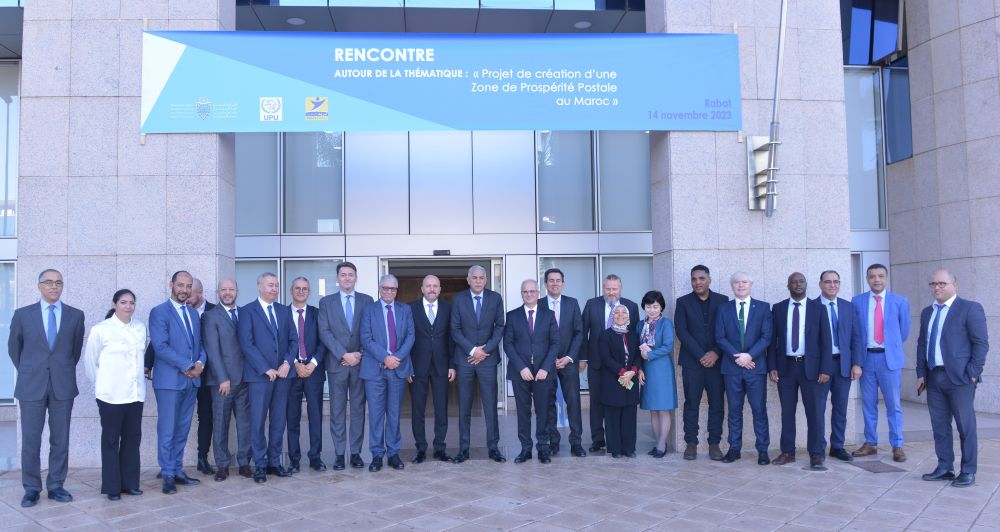 The PPZ initiative was launched in late 2023 and driven by Poste Maroc, the designated operator of Morocco. This PPZ pilot project successfully created the IT blueprint which is now being implemented in PPZ projects around the world. (Image: CLS)
The 6 modules of a PPZ
project
A Postal Prosperity Zone (PPZ) project is structured around a set of clearly defined, modular building blocks.
Each module addresses a specific layer of the cross-border ecommerce value chain and can be implemented independently or in combination, depending on national priorities, existing capabilities and strategic ambitions.
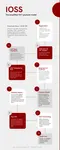
While the modules are interrelated, they follow a logical separation of concerns:
Postal Prosperity Zone
The Six Modules
-
I
PPZ IT Connector
Digital integration between commercial suppliers and the Designated Operator; standardised data exchange using UPU systems and standards.
-
II
PPZ Customs Enablement
Customs regulation, procedures, risk management and customs-related IT & data integration.
-
III
PPZ eHub & Trade Infrastructure
Physical and operational infrastructure for import, export and transit — including customs-integrated logistics, sorting, warehousing and fulfilment.
-
IV
Transit, Export & Market Access Enablement
Activation of PPZ capabilities across regions and markets, including transit corridors, export models and market access for local merchants.
-
V
Domestic Capability Upgrade
Domestic delivery, returns, payments and value-added services required to remain competitive in the local market.
-
VI
Business Development & Legal Framework
Commercial products, pricing, contracts, partnerships and governance structures.
Module 1: PPZ IT Connector
Module 1 establishes the required digital infrastructure, facilitating connections between commercial volume suppliers and Designated Operators via the UPU IT system.
It transforms commercial data into the widely adopted UPU data models (e.g. ITMATT) to ensure seamless integration and accessibility. This creates the seamless data flows needed for efficient delivery, customs, and tracking processes.
The benefits of the global postal model – including a unified integration/IT system, a single unified ID/barcode and label – are also made accessible to commercial shippers. This digitises the 1st and 2nd leg and opens it to the entire ecommerce market.
Module 2: Customs
Enablement
In most countries postal customs clearance has become a competitive disadvantage.
The PPZ Customs Model is fully compliant with the World Customs Organization (WCO) and UPU and is based on the UPU IT system: data is exchanged in real-time on item level including the content in any consignment.
This successfully transforms any postal customs clearance disadvantage into a competitive advantage and builds on the traditionally good relationship between Designated Operators and their national customs authorities.
The PPZ has developed a digital, automated postal customs model (“Blue Lane”) which is currently undergoing testing. The model meets all the benchmarks and requirements of commercial suppliers.
Simultaneously, the PPZ eHub Blueprint tackles the issue of infrastructure. The Designated Operator’s traditional, largely manual IMPC/Offices of Exchange are upgraded, digitised and automated. This is achieved in partnership with technology and infrastructure service providers from among the UPU CC members.
The result is a competitive import gateway for logistics and customs, for both traditional post-to-post and new commercial-to-post volumes. The PPZ transforms customs clearance into an asset of a Designated Operator at Destination.
Module 3: eHub & Trade Infrastructure
Module 3 of the PPZ focuses on domestic solutions (delivery and value-added services).
The PPZ recognises that IT integration, import and customs clearance represent the greatest immediate growth opportunity for Designated Operators.
However, to capture this potential, domestic delivery solutions – along with their supporting products, service levels, and pricing structure – must be fully competitive with those of leading express and other commercial logistics service providers.
In a PPZ project, the project partners work alongside the Designated Operator to drive digitalization, automation, and process optimization across the delivery value chain.
This collaborative approach enables the rapid introduction of innovative offerings such as advanced reverse logistics, integrated payment solutions, and customer-focused digital services, all tailored to the evolving needs of the ecommerce market.
All enhancements are demand-driven and designed to ensure that Designated Operators remain essential, competitive partners in domestic and cross-border delivery.
Module 4: Transit,
Export & Market Access Enablement
&
Module 5: Domestic
Capability Upgrade
Modules 4 and 5 expand the scope of PPZ.
At its core – and this is where the greatest short and medium-term benefits for Designated Operators can be achieved – the PPZ focuses on inbound ecommerce. PPZ Modules 4 and 5 also address:
- Export – use of IT integration, the customs model, and the PPZ eHub infrastructure for exports from the domestic market, especially for SMEs, and leveraging the warehousing capabilities of a PPZ eHub; and
- Transit – forwarding parcels to third markets, allowing a PPZ Designated Operator to act as a regional ecommerce hub.
Module 6: Business Development & Legal
Framework
Modules 1–5 establish the technical, operational, and procedural foundations for competitiveness, while Module 6 ensures these capabilities are effectively translated into commercial success. Products, services, and pricing structures are adapted and optimized to the PPZ environment, supporting Designated Operators in negotiating and establishing bilateral agreements with major volume suppliers, and developing the necessary contractual documentation.
By aligning commercial terms with the new PPZ ecosystem, Designated Operators can fully realise the business opportunities created by the PPZ, ensuring both agility and compliance in a rapidly changing market environment.
PPZ: Who wins? Who loses?
The primary winners are:
- Designated Operators at Destination, the countries that adopt and implement the PPZ model and their national economies, which benefit from the modernisation and expansion of customs and logistics infrastructure through PPZ eHubs.
- Commercial volume suppliers, such as global marketplaces and logistics integrators, who acquire new, competitive partners offering more efficient, compliant access to and delivery in key markets.
- The UPU as the PPZ revitalises its IT system and strengthens its role as the backbone of global postal data and standards. Ultimately, the entire postal sector profits from a renewed, more integrated and competitive ecosystem.
Conversely, operators leveraging the fragmentation of the postal sector and weakened position of many Designated Operators will be less enthusiastic about the PPZ.
These include international express carriers whose closed end-to-end networks face new competition from PPZ-enabled Designated Operators, and internationally active Designated Operators that have adopted the express carrier model to tie up export volumes and use Designated Operators at Destination as local last-mile providers while retaining much of the margin.
The PPZ Value Proposition
1. For
Designated Operators
The PPZ reinvigorates postal networks with the influx of international ecommerce volumes. The postal operator gains direct digital connectivity to global merchants and platforms, allowing it to participate at the centre of cross-border ecommerce, rather than as a last-mile provider.
PPZ eHubs in free zones or key logistics centres, and digitised, automated state-of-the art customs processes compliant with WCO/UPU guidelines and based on best-in-class benchmarks, allow Designated Operators to leverage their core strengths – nationwide delivery networks, customer trust, and regulatory status – to efficiently handle larger flows of parcels.
Special customs arrangements and expedited clearance procedures further enhance the Designated Operator’s value proposition, allowing them to reposition themselves as key players and infrastructure / compliance service providers in ecommerce logistics, restoring both volume and margin potential.
2. For
the UPU and Regulators
The PPZ aligns with the UPU strategy to provide Designated Operators with digital tools and standardised processes, ensuring the UPU remains relevant in a changing world.
Through its Postal Technology Centre (PTC) and Consultative Committee (CC), the UPU upgrades its existing global data platform in collaboration with Wider Postal Sector Players, ensuring sustainable relevance and revenue streams.
Customs authorities benefit from the advanced risk-management tools embedded in the PPZ’s “Blue Lane” model which uses electronic advance data and automated sorting for rapid clearance of low-risk parcels.
This meets regulatory needs for transparency and compliance, supports trade facilitation, and strengthens the reputation of free zones and postal networks as reliable, secure gateways for global commerce.
3. For
Commercial Partners
Ecommerce platforms, global shippers, and logistics providers gain seamless access to new markets.
A marketplace or logistics provider can connect once to the PPZ ecosystem using a standardised digital interface, one ID and one label, one integration. This single API-based connector ensures that all necessary data for customs, tracking, and delivery flows will be automatically exchanged between the supplier and the destination post.
For commercial shippers, this results in lower IT costs, faster market entry, and access to advanced logistics infrastructure.
PPZ eHubs, based on the PPZ Customs Model and located in strategic free zones, provide competitive, highly digital and automated customs clearance, customs inspection, and value-added services for postal and commercial shipments.
Marketplaces and logistics providers can expand their reach with more predictable, compliant, and efficient cross-border delivery channels.
A Blueprint for Mutual Renewal
Ultimately, the PPZ initiative is a blueprint for the renewal of the entire cross-border postal and ecommerce ecosystem. It addresses today’s fragmentation, restores the competitiveness of Designated Operators, creates tangible value for commercial partners, and strengthens the foundational infrastructure and regulatory coherence provided by the UPU.
By fostering alignment and interoperability across all stakeholders, PPZ makes the global market more efficient, secure, and sustainable for the next generation of international trade.
Author: Walter Trezek Linkedin
Share this article:
- Home ›
- One Stop Europe ›
- Postal Prosperity Zone (PPZ): Part 2
The Commerce Logistics Specialists provide the advice and support you need to succeed in this evolving digital commerce & logistics environment.

35+ Years' Experience
We serve a wide variety of European & international clients in all areas of Digital Commerce & Logistics.

Powerful Network
We work directly with the EU Commission, UPU, public authorities, regulators, global associations & major industry stakeholders.

Shaping the Industry
We are international experts in our field, chosen to help determine tomorrow’s European and global standards.
Contact us to find out more.
READY TO UPGRADE?
Secure your seat in the CLS Business Lounge – premium market intelligence & insights + one-on-one business support each month.
Recent Articles


-
The PPZ: A Blueprint for Postal Cross-Border Ecommerce & Logistics
Mar 10, 26 09:30 AM
 Discover the Postal Prosperity Zone (PPZ), a tried and tested blueprint for efficient and effective postal cross-border ecommerce and logistics.
 -
The Postal Prosperity Zone: How Posts Lost Control and Volume
Mar 10, 26 07:01 AM
 Designated Operators currently play only a minor role in cross-border ecommerce—they can regain leverage, data, and margins with the Postal Prosperity Zone.
 -
The evolution of postal tariffs: past, present & future
May 25, 23 04:16 AM
 Postal tariffs from the 1970s to the present: how terminal dues and changing rate systems reflect international development and shape the global postal network.


Cross-Border Ecommerce: Creating the Digital Single Market
Walter Trezek in Logistik Express on cross-border ecommerce, and industry association Ecommerce Europe creating standards for the digital single market
One Stop Europe: Creating A Single European E Commerce Market
Explore the logistics and e commerce business models which leverage the changing EU import rules (1 July 2021), to flourish in the single e commerce market.
International Ecommerce: 8 Factors Impacting Online Retail in 2021
8 factors including mandatory EAD for commercial items and the One Stop Shop (OSS) system for fiscal representation will shape international ecommerce in 2021.
One Stop Shop (OSS): Simplifying Intra-EU VAT Payment
Ecommerce Big Bang Series: The EU VAT e-commerce package and VAT for intra-EU ecommerce. A guide to the simplified VAT payment option, the One Stop Shop (OSS).


















READY TO UPGRADE?
CLS Business Lounge: Get the market intelligence & insights you need to thrive in a disruptive business environment.